
Real build · 02
Our own site, built exactly the way we build for clients — spec-first, tracking wired in from day one, not a template with a logo swapped in.
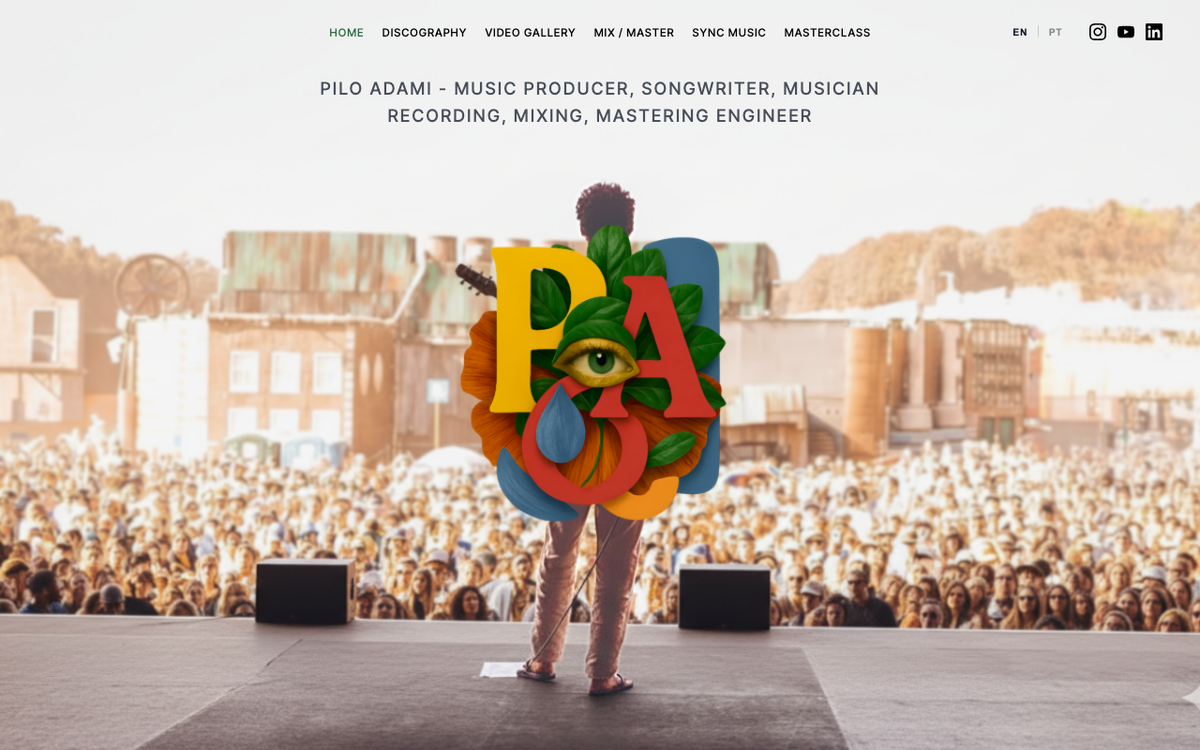
piloadami.co.uk — homepage, desktop
The website
What
Pilo's own multi-page site — discography, video gallery, mix/master, sync music, masterclasses — built the same way client sites get built, not a quick personal exception to the process.
Why
The site is where every channel — social, sync outreach, referrals — sends people to prove the work is real and let them take the next step. Running the exact same build process on it is what keeps that process honest: if it doesn't hold up on our own site, it doesn't get claimed to clients either.
How
Design system extracted before a single line of HTML was written, then built page by page from that spec. Tracking was wired in from day one, not bolted on after launch.
The offer pages
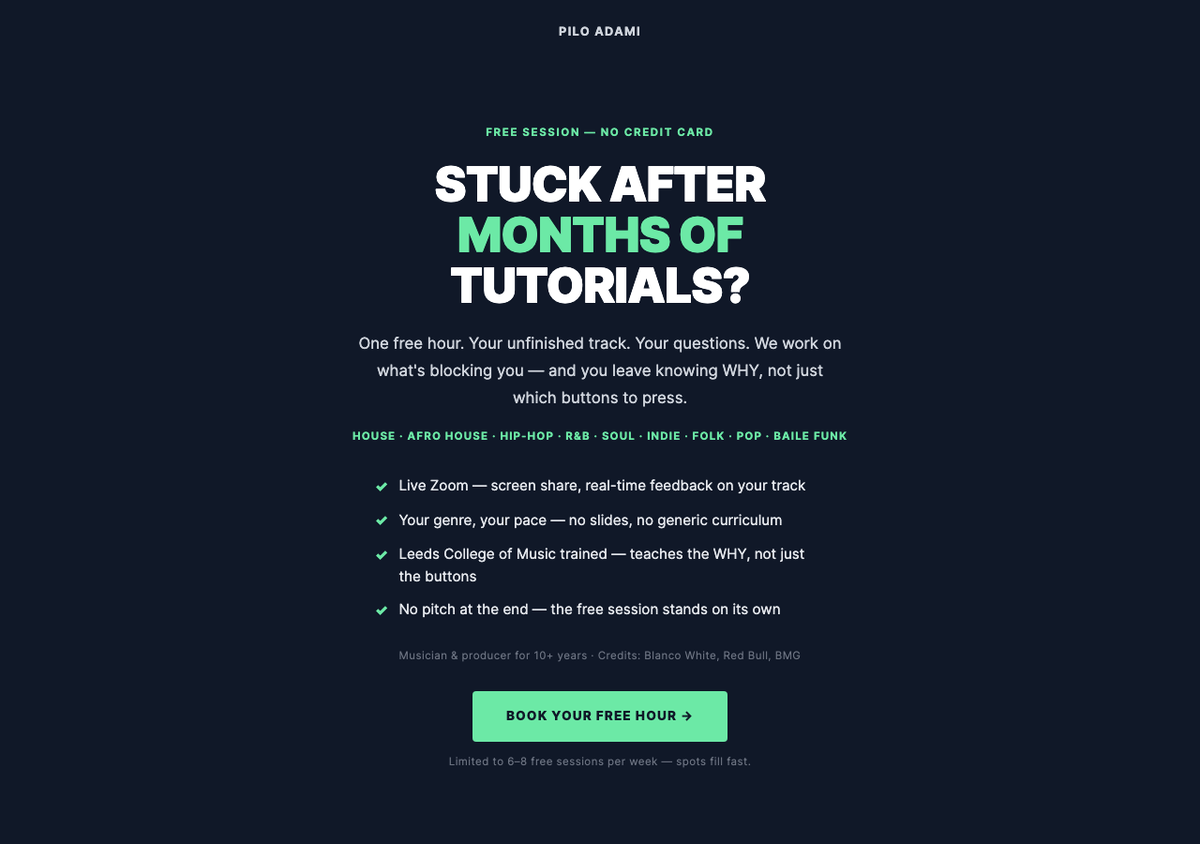
piloadami.co.uk/free-1-to-1-lesson — the free-session offer page
What
Lesson and masterclass offer pages — the free session, the 1-to-1 masterclass, weekly production coaching — each built to a fixed conversion structure.
Why
If the page doesn't match the audience it's actually reaching, every channel feeding it is wasted regardless of how good the traffic is. The full funnel gets mapped — traffic source, what's exchanged before the ask, capture, nurture, conversion, recovery — and audited against known buying-psychology principles (social proof, scarcity, authority, and the other signals from Google's "Messy Middle" research) before any page gets designed.
How
Only once that funnel map is fixed does the page get built to it. The free-session offer page below is one output: a single unresolved-problem headline ("Stuck after months of tutorials?"), one qualifying action, and proof — credits, training, years active — stacked directly beneath the ask, no competing links.
This is also where a funnel gets corrected when the evidence disagrees with the original brief: the free-session funnel was originally built for "DAW plateau producers." Tracing the only confirmed 1-to-1 lesson conversion back through the funnel showed a completely different audience — a singer-songwriter. Instead of rewriting the existing page on a guess, a dedicated segment page was built for the audience the data actually pointed to.